
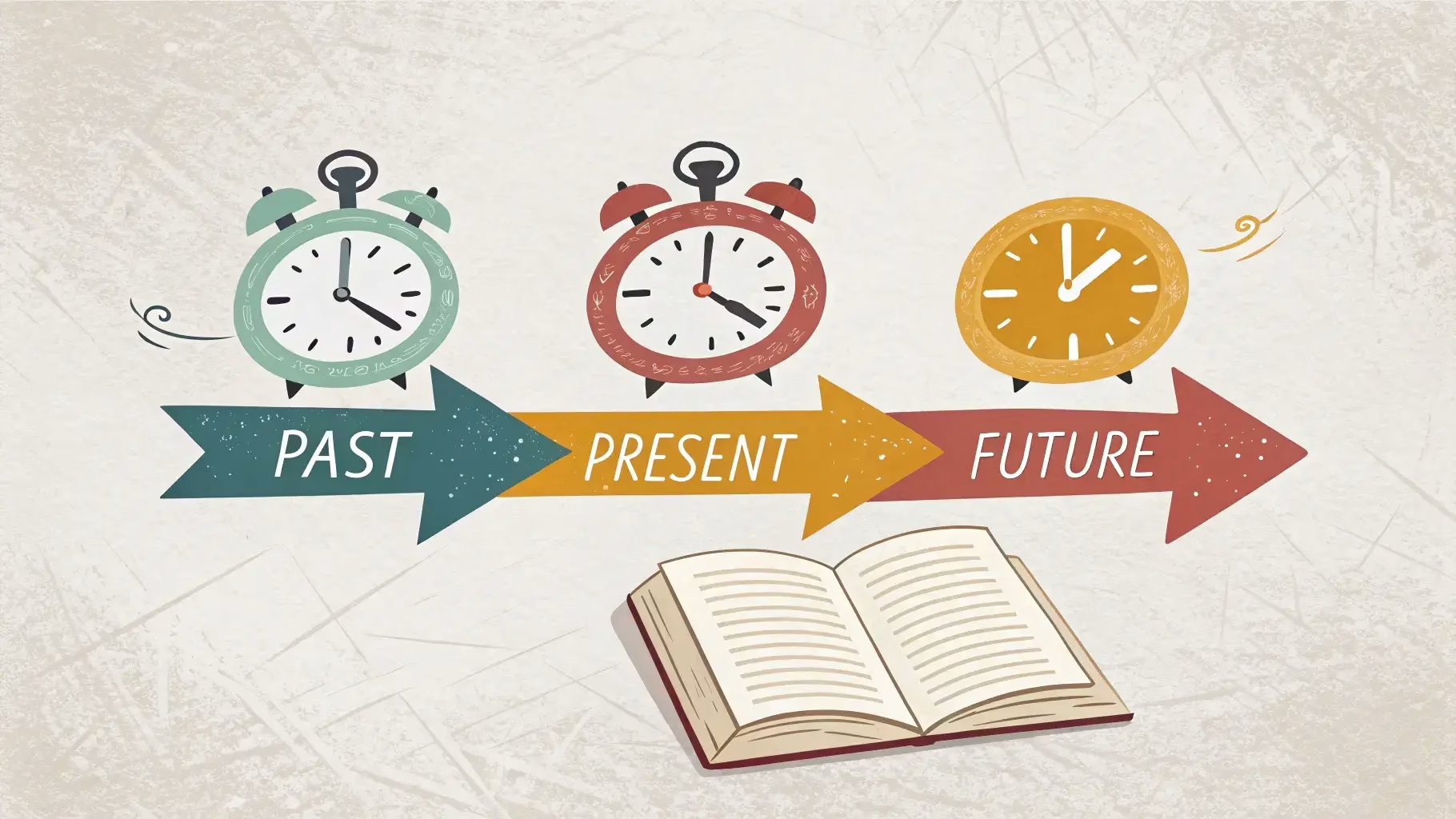
Have you ever started telling a story in English and suddenly felt stuck? You know what happened, but choosing the right tenses for storytelling in English feels confusing. One moment you’re using past tense, then you switch to present, and before you know it, your listener looks puzzled.
Here’s the truth: English stories sound natural only when tenses for storytelling in English flow smoothly. Most beginners mix up past simple, past continuous, and past perfect while narrating. I’ve seen countless English learners struggle with this exact problem.
By the end of this guide, you’ll know exactly which tense to use when telling a story. You’ll understand how native speakers navigate between different verb forms naturally. Plus, you’ll get practical exercises to build confidence.
Mini Action: Think of the last story you told — did you jump between past and present tenses? If yes, don’t worry. You’re about to fix that.
Table of Contents
- Why Tenses for Storytelling in English Matter
- The 3 Main Tenses You Need for Telling Stories
- Using the Present Tense for Stories and Drama
- Common Tense Mistakes in English Storytelling
- Quick Storytelling Practice Exercise
- FAQs About Narrative Tenses in English
- Takeaway: Master English Tenses for Narration
Why Tenses for Storytelling in English Matter
Let me explain something important: tense equals timeline clarity for your listener. When you tell a story, your verb forms create a map. This map shows your listener when things happened and in what order.
Think about it this way. If I say “I eat breakfast when the phone rings,” that sounds weird, right? But “I was eating breakfast when the phone rang” makes perfect sense. The difference? Proper storytelling tenses in English guide your listener through time.
Native speakers switch between tenses naturally because they’ve practiced for years. However, you can train this skill too. It’s not magic—it’s pattern recognition. Once you understand the basic patterns of narrative tenses in English, everything becomes easier.
Cultural Insight: In English storytelling, tense changes often reflect a shift in focus or emotion, not just time. For example, a speaker might say, “I was walking down the street when suddenly I see this huge dog!” Switching to present tense here creates drama and immediacy.
The 3 Main Tenses You Need for Telling Stories
Most English storytelling techniques rely on three key tenses. Let’s break them down with clear examples you can use right away.
1. Past Simple — Setting the Scene
Past simple is your best friend for the main storyline. This tense describes completed actions that form the backbone of your story. Whenever something finished happening, past simple steps in.
Function Table:
| Function | Example |
|---|---|
| Main events | “I woke up late and missed the bus.” |
| Completed actions | “We watched a movie and had pizza.” |
| Sequential actions | “She opened the door, smiled, and invited me in.” |
Tip: Use past simple for the main events that move your story forward. Think of it as the “what happened” tense.
For instance, imagine telling a friend about your weekend. You might say: “Last Saturday, I went to the beach. The sun shone brightly all day. We played volleyball and swam in the ocean.”
Notice how each action is complete and moves the story along? That’s past tense in English stories doing its job perfectly.
2. Past Continuous — Creating Background or Action in Progress
Now, let’s add depth to your stories. Past continuous and past perfect in storytelling make narratives come alive with background details and ongoing actions.
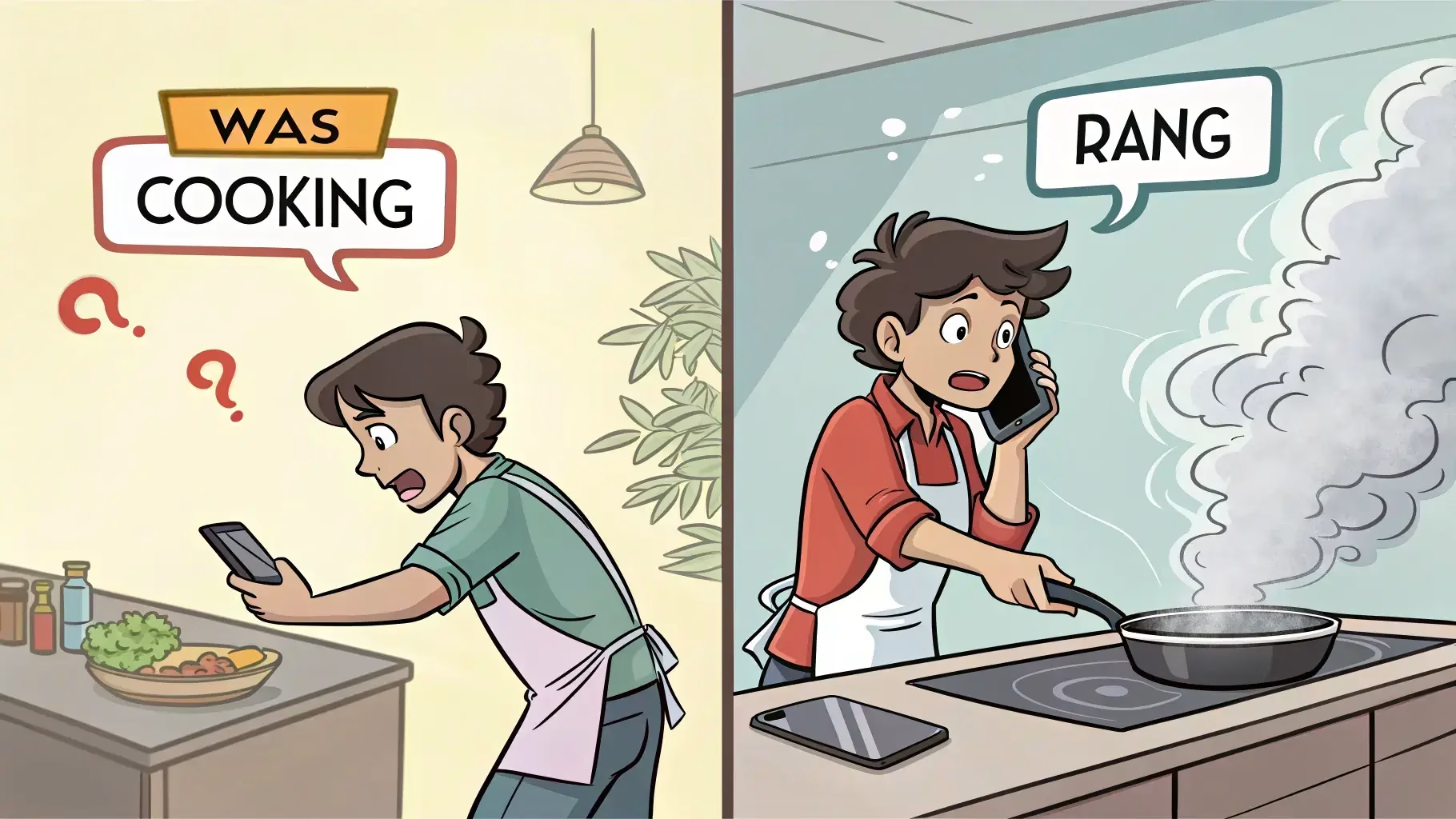
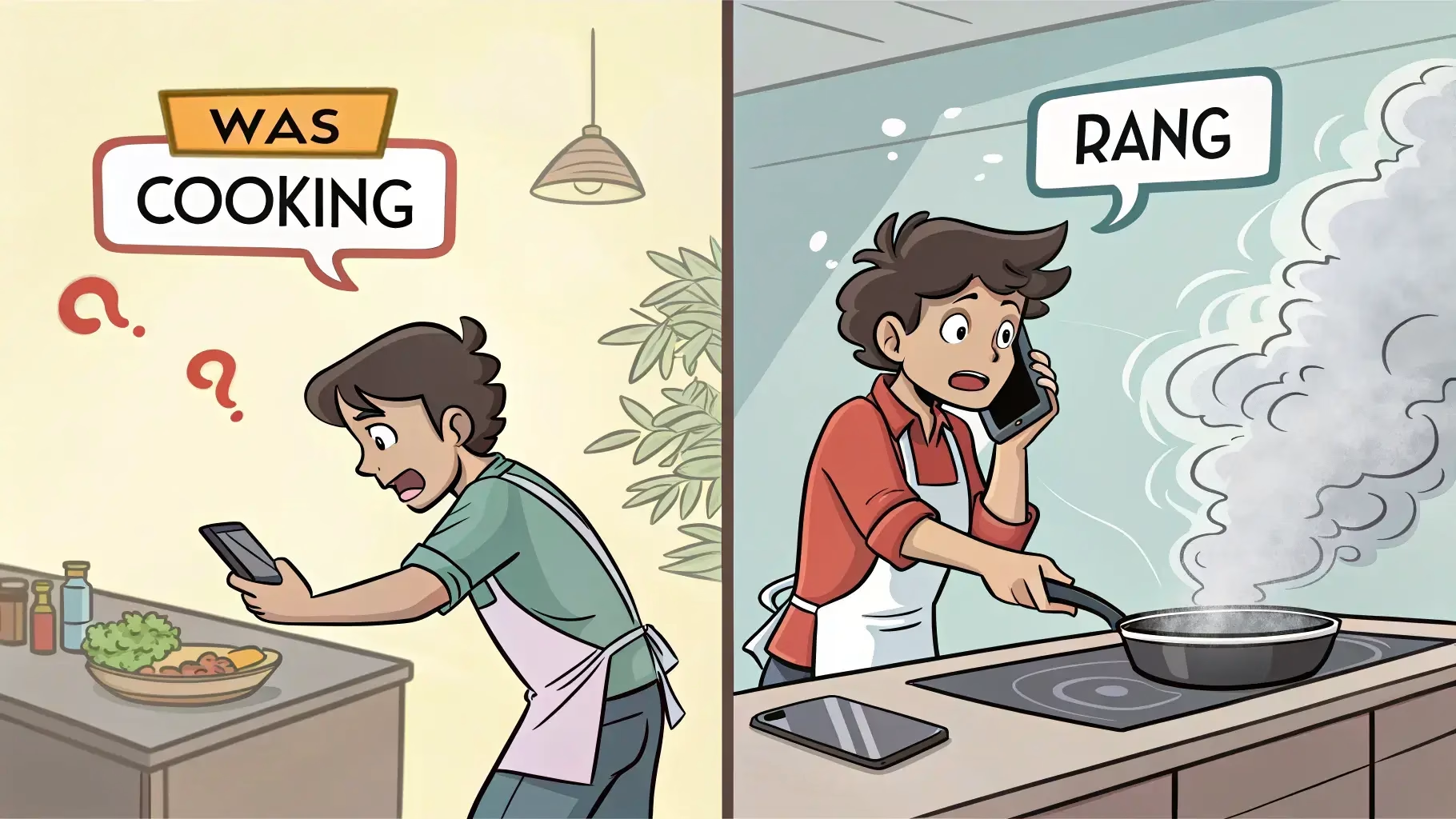
Past continuous describes what was happening at a specific moment. It sets the scene and creates atmosphere. Also, it shows actions that were interrupted by something else.
Function Table:
| Function | Example |
|---|---|
| Background details | “It was raining when I left the house.” |
| Interrupted actions | “I was cooking when the phone rang.” |
| Simultaneous actions | “While she was studying, her brother was playing guitar.” |
Here’s a practical example combining both tenses: “Yesterday morning, I was walking to work when I saw my old friend. Birds were singing, and the sun was rising. Suddenly, she called my name.”
See the difference? Past simple (“saw,” “called”) tells what happened. Meanwhile, past continuous (“was walking,” “were singing,” “was rising”) paints the picture around those events.
Mini Action: Try combining a past simple and a past continuous sentence from your day. For example: “I was drinking coffee when my boss called me.”
This combination is crucial for grammar tips for storytelling because it shows the relationship between actions.
3. Past Perfect — Flashbacks and Earlier Events
Past perfect might seem tricky at first. However, it’s incredibly useful for how to tell stories in English grammar when you need to jump back in time.
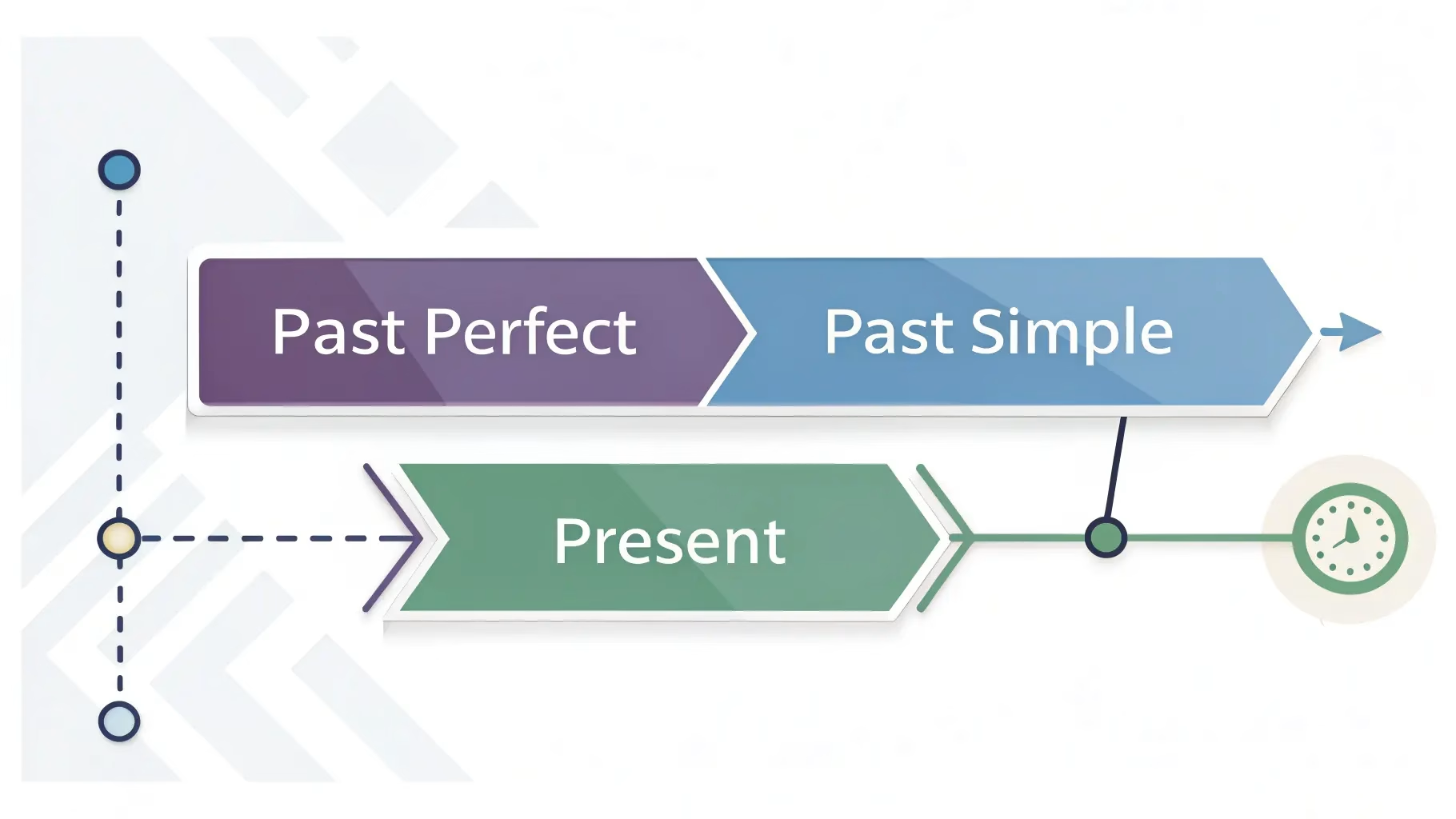
This tense shows that something happened before another past event. It’s your time-travel tool for storytelling. Think of it as going back even further into the past.
Function Table:
| Function | Example |
|---|---|
| Action before another | “I had already eaten when they arrived.” |
| Flashback | “She had never seen snow before that trip.” |
| Explaining background | “He felt nervous because he hadn’t prepared for the test.” |
Let me give you a real-life example: “When I arrived at the cinema, the movie had already started. My friends had bought tickets earlier, but I had forgotten to check the time.”
Notice how “had started,” “had bought,” and “had forgotten” all happened before “arrived”? That’s past perfect creating a clear timeline.
Cultural Insight: Native speakers often use “had + past participle” subtly—sometimes just once—to signal a time jump in stories. For example: “I realized I’d left my wallet at home” (contraction of “had left”). After establishing this earlier time, they often switch back to past simple.
Using the Present Tense for Stories and Drama
Here’s something interesting about using the present tense for stories: it makes events feel immediate and exciting. Native speakers often do this, especially in casual conversations.
This technique, called the “historical present” or “narrative present,” brings your listener right into the action. Instead of saying “I was walking,” you say “I’m walking.” It’s like watching a movie instead of reading a history book.
Example:
“So I’m sitting on the train yesterday, right? And this guy starts singing loudly! Everyone is looking around, nobody knows what to do. Then the conductor walks in and…”
Notice how present tense creates energy and drama? This works brilliantly for funny stories or exciting moments. However, remember to stay consistent once you choose this style.
Want to learn more storytelling strategies beyond just tenses? Check out our comprehensive guide on 10 proven ways to tell better stories in English for additional techniques.
Mini Action: Try retelling a funny event from your week using the present tense. Record yourself and listen. Does it feel more immediate? That’s the power of English tenses for narration in action.
Common Tense Mistakes in English Storytelling
Let’s talk about common tense mistakes in English that I see repeatedly. Recognizing these errors is the first step toward fixing them.
Mistake #1: Mixing Present and Past Accidentally
Wrong: “Yesterday I go to the market and bought vegetables.” Right: “Yesterday I went to the market and bought vegetables.”
This happens when your brain switches languages mid-sentence. Stay aware of your chosen timeline. Once you start in past tense, keep going unless you’re deliberately creating drama.
Mistake #2: Overusing Past Perfect
Awkward: “I had woken up, had brushed my teeth, and had eaten breakfast.” Better: “I woke up, brushed my teeth, and ate breakfast.”
You don’t need past perfect for every action. Use it only when showing that something happened before another past event. Otherwise, past simple works perfectly fine.
Mistake #3: Forgetting Tense Consistency in Dialogues
Wrong: “She said she is tired and wants to sleep.” Right: “She said she was tired and wanted to sleep.”
When reporting what someone said in the past, shift the tenses back. This is called “reported speech,” and it’s essential for storytelling grammar for ESL learners.
Mistake #4: Using “Was” Instead of “Had Been”
Wrong: “I was there for two hours when she finally arrived.” Right: “I had been there for two hours when she finally arrived.”
Use past perfect continuous (had been + verb-ing) to show an ongoing action that started before another past event.
Fix: Practice by narrating short stories (1–2 minutes) and record yourself. Listen for tense changes. Are they intentional? Do they serve a purpose? This self-correction builds awareness faster than any textbook exercise.
Additionally, reading English books and watching movies with subtitles helps tremendously. Notice how authors and screenwriters use past simple vs past continuous examples naturally.
Quick Storytelling Practice Exercise
Let’s put your knowledge into action. Below is a fill-in-the-blanks story. Choose the correct tense for each verb. This exercise covers everything we’ve discussed about how to speak about past events in English.
Practice Story:
“When I _________ (wake up) this morning, it _________ (rain) heavily. I quickly _________ (grab) my umbrella because I _________ (not want) to get wet. While I _________ (walk) to the bus stop, I _________ (remember) that I _________ (forget) my phone at home. The bus _________ (arrive) just as I _________ (reach) the stop. I _________ (feel) lucky!”
Answers:
When I woke up (past simple) this morning, it was raining (past continuous) heavily. I quickly grabbed (past simple) my umbrella because I didn’t want (past simple) to get wet. While I was walking (past continuous) to the bus stop, I remembered (past simple) that I had forgotten (past perfect) my phone at home. The bus arrived (past simple) just as I reached (past simple) the stop. I felt (past simple) lucky!
Analysis:
- “Woke up” and “grabbed” are main events (past simple)
- “Was raining” sets the background (past continuous)
- “Was walking” shows ongoing action (past continuous)
- “Had forgotten” shows something happened earlier (past perfect)
- Other verbs describe completed actions (past simple)
Mini Action: Now write your own short story (5-7 sentences) about something that happened yesterday. Focus on tense consistency in stories as you write.
Subscribe for Free English Tips
FAQs About Narrative Tenses in English
The four main narrative tenses in English are:
1. Past Simple – for main events (“I walked”)
2. Past Continuous – for background and interrupted actions (“I was walking”)
3. Past Perfect – for earlier events (“I had walked”)
4. Past Perfect Continuous – for ongoing earlier actions (“I had been walking”)
In storytelling, English learners mostly use the first three tenses for clarity and flow.
Past Simple is the most common tense in storytelling. It describes clear, completed actions. Past Continuous adds background detail, and together they form the backbone of most stories.
Sometimes, speakers use the Present Tense to make a story more dramatic and immediate.
The Past Simple tense is most widely used in narrative writing — novels, short stories, and biographies. It moves the story forward smoothly and clearly.
Example: “She opened the door and stepped inside.”
Yes, but purposefully!
Past → Present: adds excitement or immediacy
Past Simple → Past Perfect: signals flashbacks
Dialogue: often shifts naturally to present tense
Random tense changes confuse readers, so stay consistent for clarity.
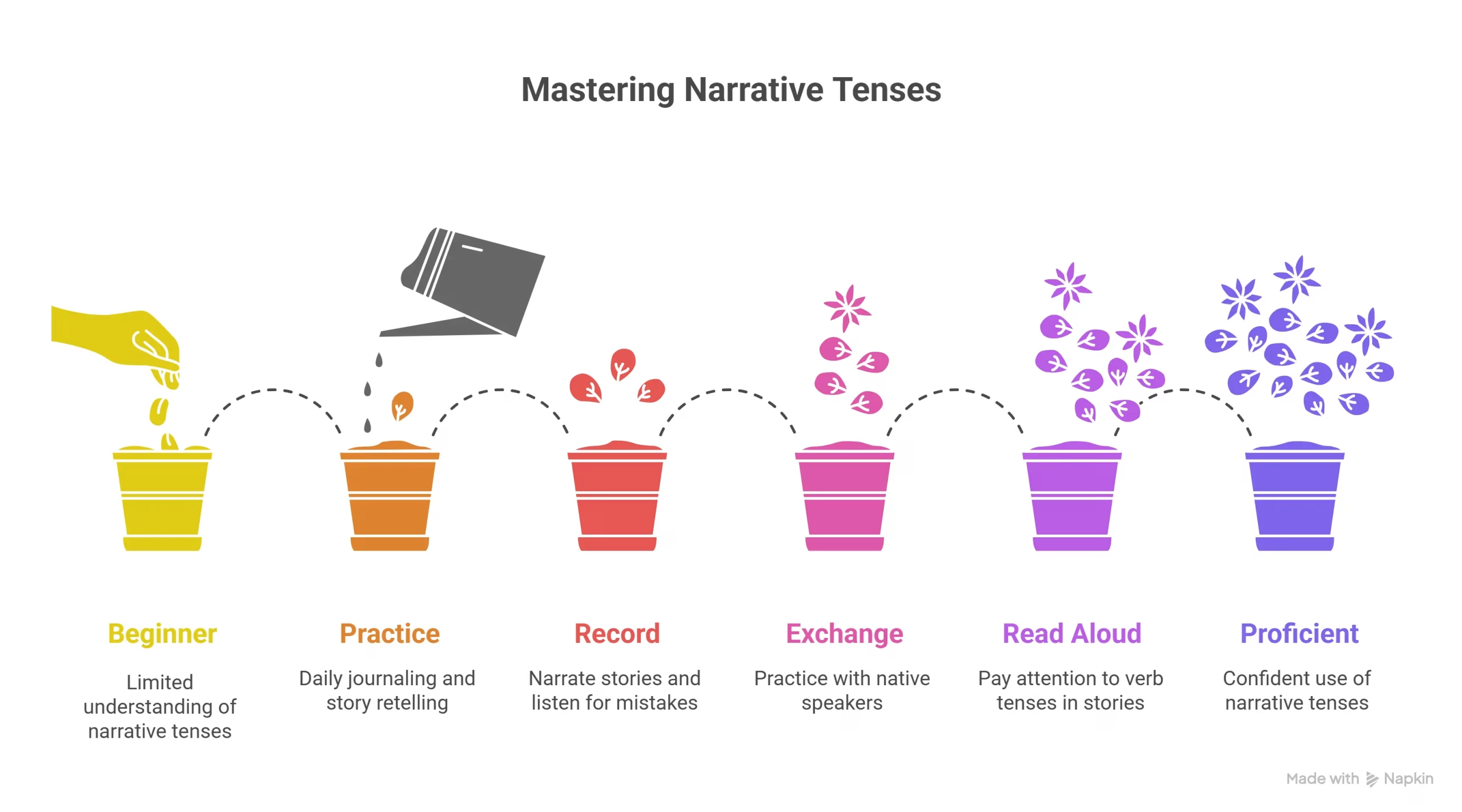
Here are quick ways to practice storytelling tenses in English:
1. Daily journaling – Write three sentences about your day using different tenses
2. Story retelling – Watch a short video and retell it using proper tenses
3. Recording yourself – Narrate a story and listen for tense mistakes
4. Language exchange – Practice with native speakers or fellow learners
5. Reading aloud – Choose a story and read it, paying attention to each verb tense
Takeaway: Master English Tenses for Narration
Here’s what I want you to remember: tenses for storytelling in English are not strict rules to memorize. Instead, they’re tools to time-travel in your narratives. Each tense serves a purpose, creating clarity and emotion.
You now understand the basics of how to tell stories in English grammar:
- Use past simple for your main events
- Add past continuous for background and atmosphere
- Include past perfect when jumping back in time
- Experiment with present tense for dramatic effect
Moreover, don’t pressure yourself to be perfect immediately. Even native speakers occasionally mix tenses in casual speech. What matters is clear communication and steady improvement.
Start noticing tenses in books, movies, and podcasts. How do writers and speakers guide you through time? This awareness, combined with regular speaking practice, will transform your storytelling ability. For structured practice materials including storytelling exercises, grammar worksheets, and vocabulary resources, check out our premium English learning resources.
Your Next Steps:
- Write a short story (100-150 words) about your most memorable day this year
- Use all three main past tenses at least once
- Read it aloud and record yourself
- Listen for any awkward tense switches
- Revise and improve
Remember, every story you tell is practice. Every mistake teaches you something new. Keep experimenting with English fluency through storytelling, and soon these tenses will feel completely natural.
Now go tell someone a great story—you’ve got the tools to do it right!
Related Articles You Might Enjoy: