

Here’s something I’ve noticed: common storytelling mistakes in English can turn a captivating tale into a confusing mess. And honestly? It happens to the best of us.
Whether you’re sharing a funny memory with friends or presenting a case study at work, storytelling is everywhere. However, many ESL learners struggle with storytelling errors in English that make their narratives sound unnatural or hard to follow. The good news? Most of these mistakes are easy to fix once you know what to look for.
In this guide, I’ll walk you through the biggest English narrative pitfalls and show you exactly how to fix storytelling mistakes that might be holding you back. By the end, you’ll have practical English storytelling tips you can use immediately to improve English storytelling skills.
Ready to transform the way you tell stories? Let’s dive in.
Related: Check out our complete guide on 10 Proven Ways to Tell Better Stories in English for advanced techniques.
Table of Contents
- Confusing Verb Tenses When Telling Stories
- Adding Too Many Unnecessary Details
- Weak Story Structure That Loses Readers
- Repetitive or Basic Vocabulary That Sounds Unnatural
- No Emotional Engagement in Your Stories
- Poor Transitions Between Events
- Overusing Filler Words in Your Narrative
- Frequently Asked Questions
- Putting It All Together
Confusing Verb Tenses When Telling Stories
Why It Happens
This is probably the most common narrative mistake I see among English learners. You start telling a story in the past tense, then suddenly jump to present tense, then back again. For example:
❌ “Yesterday I went to the store, and then I see my friend Maria. She tells me about her new job…”
The problem? Your listener gets confused about when things happened. This ESL storytelling challenge occurs because in some languages, tense shifting works differently.
How to Fix It
Use what I call the “story timeline” rule. Most personal stories follow this simple pattern:
Past Simple for main events:
- “I walked into the café.”
- “She looked at me.”
- “We decided to leave.”
Past Continuous for background actions:
- “While I was waiting for my coffee…”
- “The rain was falling outside…”
✅ Correct version: “Yesterday I went to the store, and then I saw my friend Maria. She told me about her new job…”
Pro tip: Before telling a story, mentally decide: “This happened in the past” or “This is happening now.” Then stick with that timeframe throughout.
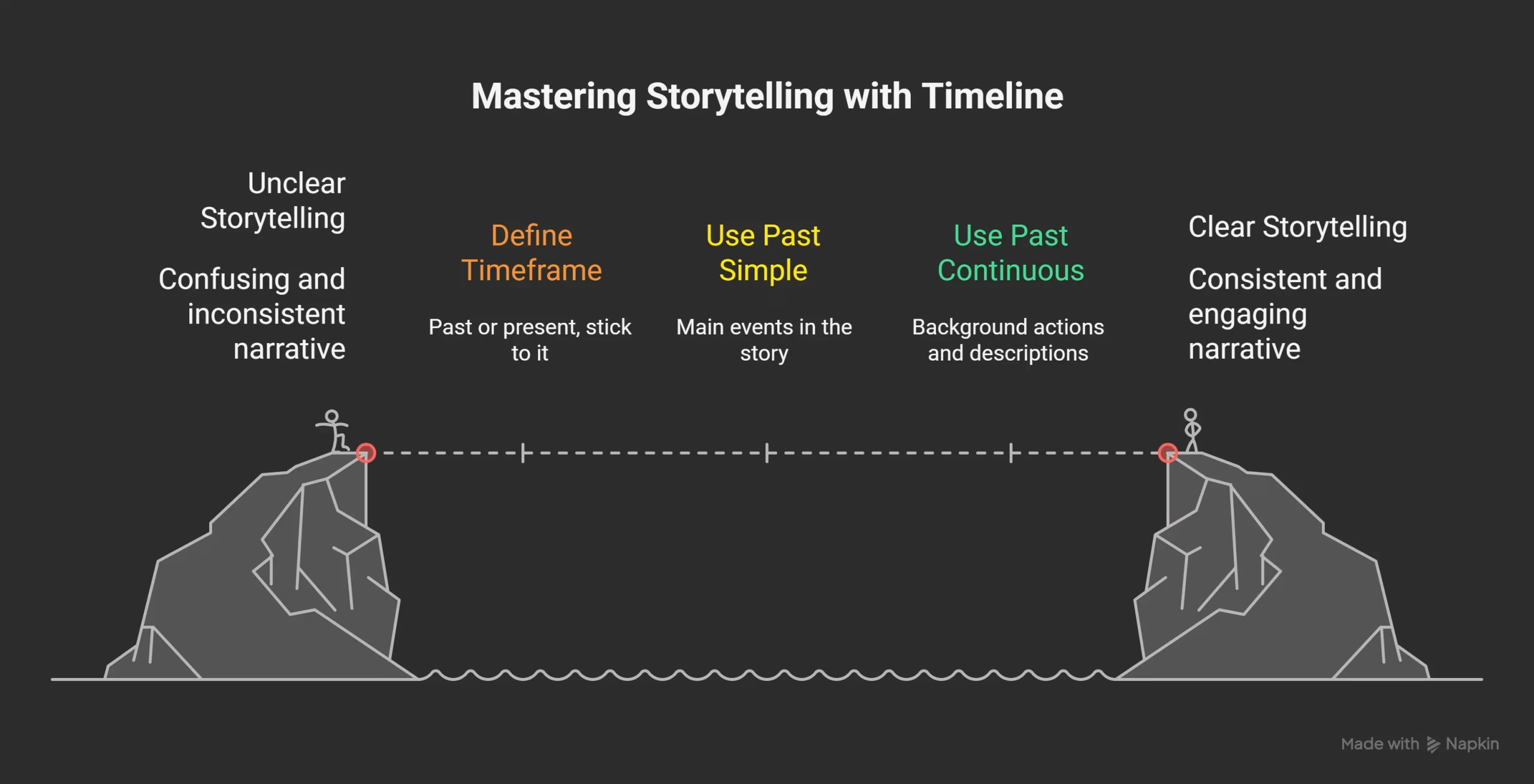
Past Simple vs Past Continuous Timeline for Storytelling
Want to master storytelling tenses? Read our detailed breakdown: 3 Essential Tenses for Storytelling in English.
Adding Too Many Unnecessary Details
Why It’s a Problem
Ever listened to someone tell a story that felt like it would never end? That’s what happens when you include every tiny detail. For instance:
❌ “I woke up at 7:15 AM, no wait, maybe 7:17 AM. Then I brushed my teeth with my blue toothbrush, the one I bought from Target last month for $4.99. After that, I put on my gray socks—actually, they were more charcoal gray…”
See the problem? These details don’t move the story forward. They just make your audience lose interest. Therefore, this becomes one of those mistakes to avoid when telling stories in English.
How to Fix It
Follow the “3 essential details” rule. For each scene, ask yourself:
- What happened? (The action)
- Who was involved? (The key people)
- Why does it matter? (The emotion or consequence)
Everything else? Cut it.
✅ Better version: “I overslept that morning and rushed to get ready. When I finally arrived at the meeting, my boss was already waiting…”
Notice how we jumped straight to what matters? That’s effective storytelling techniques for English learners in action.
Quick exercise: Next time you tell a story, record yourself. Then listen back and identify which details could be removed without losing the meaning.
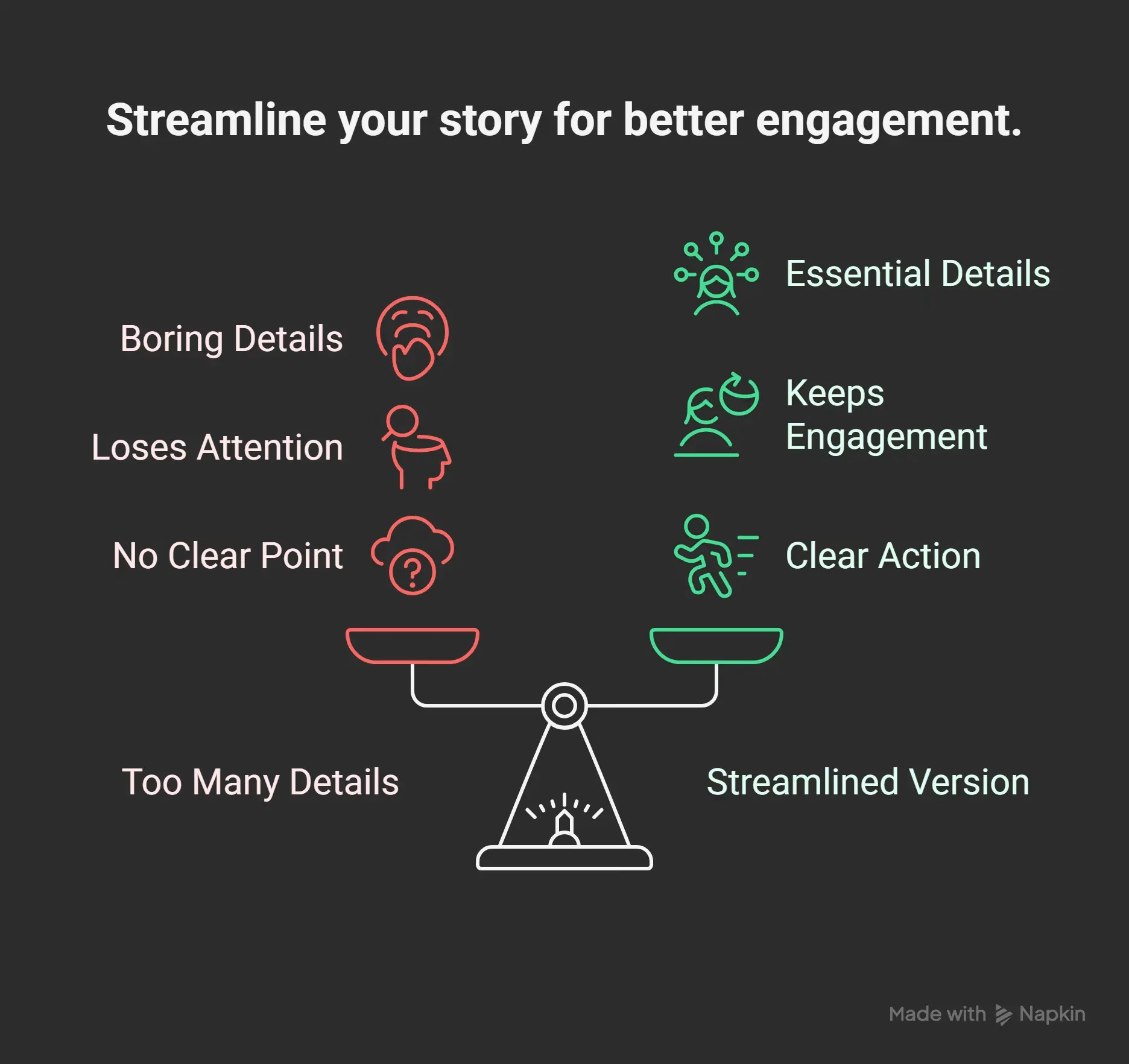
Too Many Details vs Streamlined Story Comparison
Weak Story Structure That Loses Readers
What Goes Wrong
Many story structure problems in English writing come from unclear organization. You might experience:
- Weak plotlines that wander aimlessly
- Abrupt endings that leave listeners confused
- Stories that lack conflict or resolution
For example: “So I went to the beach. It was nice. There were waves. Then I came home.”
Where’s the story? What happened that made this day worth telling?
How to Fix It
Use this simple 3-step structure every time:
Setup → Problem → Result
Let me show you:
❌ Weak structure: “I visited my grandmother. We had tea. It was a good day.”
✅ Strong structure: “Last Sunday, I visited my grandmother (Setup). When I arrived, I discovered she’d been feeling lonely since Grandpa passed away (Problem). We spent the afternoon looking through old photo albums, and I promised to visit every week (Result).”
See the difference? The second version has emotional weight and a clear arc. This is what fixing weak plotlines in English looks like.
Tips for Clear Story Endings
Your ending should answer the question: “So what?” or “What changed?”
- ❌ “And then I went home.” (Weak)
- ✅ “From that day on, I never took my family for granted.” (Strong)
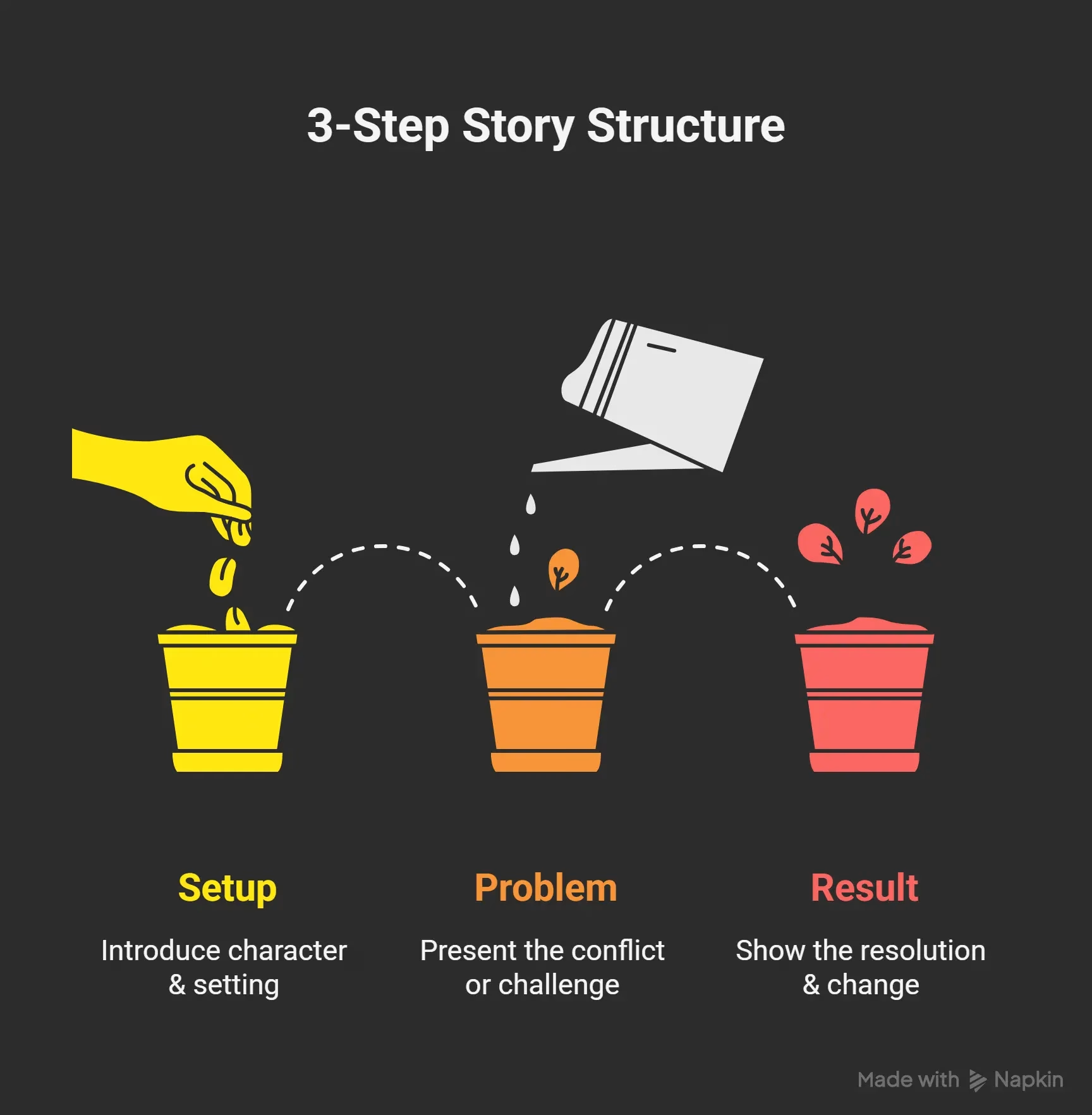
Setup-Problem-Result Story Structure Guide
Repetitive or Basic Vocabulary That Sounds Unnatural
What Happens
Using the same words repeatedly makes your stories sound flat and unnatural. For example:
❌ “I went to the park. Then I went to see my friend. We went to a café. The food was good. The coffee was good. We had a good time.”
This repetition is one of the biggest issues when learning how to make stories sound natural in English.
How to Fix It
Build what I call a “storytelling vocabulary bank.” Stop relying on basic verbs like “went,” “said,” or “good.” Here are stronger alternatives:
When describing movement, try:
- Rushed, strolled, wandered, headed, drove, hurried
For dialogue tags, use:
- Whispered, shouted, muttered, explained, insisted, replied
To describe positive experiences, choose:
- Delicious, fascinating, enjoyable, pleasant, impressive
✅ Better version: “I strolled to the park. Later, I stopped by my friend’s place. We grabbed coffee at a nearby café. The food was delicious and the atmosphere welcoming. We had an amazing time.”
Action step: Create a personal vocabulary notebook. Whenever you learn a new word, write down three example sentences. Review it before storytelling practice sessions.
Need more expressive language? Explore our collection of English Idioms for Storytelling.
No Emotional Engagement in Your Stories
What It Looks Like
Stories without emotion feel like news reports, not narratives. Consider this:
❌ “My dog died last week. He was 12 years old. We buried him in the backyard.”
Technically accurate, but where’s the feeling? This is a missed opportunity to engage your audience in English.
How to Fix It
Show emotion using sensory details instead of just stating facts. Describe what you saw, heard, felt, smelled, or touched.
Let’s rewrite that example:
✅ “Last Tuesday, I came home to an eerily quiet house. Max, my loyal companion for twelve years, wasn’t at the door with his usual excited bark. I found him lying peacefully in his favorite sunny spot by the window. As we buried him under the oak tree he loved to nap beneath, I kept thinking I heard his collar jingling.”
The difference? The second version lets readers experience the emotion rather than just hearing about it.
Small Actions Reveal Big Feelings
Instead of saying “I was nervous,” show it:
- “My hands wouldn’t stop shaking.”
- “I kept checking my phone every thirty seconds.”
- “My stomach felt like it was doing backflips.”
This technique transforms real-life ESL storytelling examples from boring to brilliant.
Poor Transitions Between Events
Common Problems
Jumping from one event to another without proper connections creates one of the most frustrating English narrative pitfalls. For example:
❌ “I finished breakfast. I was at the office. My boss called me. I got promoted.”
Wait, what? How did we get from breakfast to a promotion so quickly?
How to Fix It
Use transition connectors to guide your listener through time and space:
Time transitions:
- Later that morning…
- After a few hours…
- Suddenly…
- Meanwhile…
- By the time I arrived…
Sequence transitions:
- First… then… finally…
- Before that…
- After that…
- At the same time…
✅ Better version: “I finished breakfast around 8 AM. Thirty minutes later, I was at the office. Suddenly, my boss called me into her office. To my surprise, she offered me a promotion.”
Paragraphing Tips for Flow
Start a new paragraph when you:
- Change location
- Switch to a different time
- Introduce a new character
- Begin a new idea or scene
This simple structure helps readers follow your story effortlessly.
Overusing Filler Words in Your Narrative
What Happens
Filler words like “um,” “uh,” “like,” and “you know” weaken your storytelling impact. For instance:
❌ “So, like, I was, um, walking to the store, you know, and, like, I saw this, um, really interesting thing…”
These fillers make you sound uncertain and distract from your message. Moreover, they’re one of the bad storytelling habits in English that’s surprisingly easy to fix.
How to Fix It
Replace fillers with pauses or transitions. Silence is powerful. Instead of filling every gap with “um,” simply pause to collect your thoughts.
Here’s the strategy:
- Record yourself telling a story (use your phone)
- Count your fillers as you listen back
- Practice the same story again, focusing on pausing instead
- Repeat until fillers decrease by at least 50%
Better alternatives:
- Instead of “like” → use “for example” or “such as”
- Instead of “you know” → use “as you can imagine” or simply pause
- Instead of “um/uh” → take a breath and continue
✅ Improved version: “I was walking to the store when I noticed something interesting in the window display…”
Pro tip: Practice telling short 2-minute stories daily. The more you practice, the fewer fillers you’ll need.
For more communication tips, check out 75 English Phrases for Daily Life.
Subscribe for Free English Tips
Frequently Asked Questions
The most common mistakes include mixing verb tenses, adding unnecessary details, using repetitive vocabulary, and lacking emotional engagement. Additionally, poor story structure and overusing filler words can weaken your narratives significantly.
“Show, don’t tell” creates emotional connections with your audience. Instead of stating “I was scared,” showing it through details like “My heart was pounding” lets readers experience the emotion themselves, making stories more memorable and engaging.
Focus on active verbs and clear subjects. Instead of “The ball was thrown by Tom” (passive), say “Tom threw the ball” (active). Active voice makes your stories more direct, energetic, and easier to follow.
For business storytelling, use the Problem-Solution-Result structure, include specific data or outcomes, and focus on relatable challenges. Keep language professional yet conversational, and always connect your story to actionable insights or lessons learned.
Use dialogue to reveal character personalities and advance the plot. Keep it natural and concise—avoid lengthy speeches. Use action tags like “she whispered” or “he shouted” instead of just “said,” and break up dialogue with character actions to maintain rhythm.
Putting It All Together
Let’s recap the common storytelling mistakes in English we’ve covered:
- Confusing verb tenses → Stick to one timeframe
- Too many details → Use the “3 essential details” rule
- Weak structure → Follow Setup-Problem-Result
- Repetitive vocabulary → Build your word bank
- No emotional engagement → Show, don’t tell
- Poor transitions → Connect events clearly
- Overusing fillers → Pause instead

Engaging Storytelling in English for ESL Learners
Remember, becoming better at storytelling isn’t about perfection. It’s about practice and awareness. Each time you tell a story, pick one mistake to focus on improving. Before you know it, these effective storytelling techniques for English learners will become second nature.
Want to take your storytelling to the next level? Dive into our comprehensive guide: 10 Proven Ways to Tell Better Stories in English. You’ll discover advanced techniques that will transform your narratives completely.
Also, if you’re struggling with grammar basics, our article on Common Grammar Mistakes ESL Learners Make will help you build a stronger foundation.
Ready to practice? Visit Store.clipyourenglish.com for interactive storytelling courses and exercises designed specifically for English learners like you.
Your stories matter. Now go tell them with confidence.