

Have you ever listened to someone tell a story and thought, “Wow, they sound so natural”? Chances are, they were using idioms. These colorful expressions bring life, emotion, and authenticity to any narrative. When you use English idioms for storytelling, you’re not just translating words—you’re sharing experiences the way native speakers do.
Here’s the thing: idioms make your stories memorable. They add flavor, create vivid images, and help your audience connect with what you’re saying. By the end of this guide, you’ll know 10 powerful storytelling idioms in English that will instantly upgrade your narrative skills. If you want to master the complete art of storytelling, check out our comprehensive guide on 10 Proven Ways to Tell Better Stories in English.
Think about this: When was the last story you told? Did you use any idioms? If not, you’re about to change that.
Table of Contents
- Why Idioms Make Your Stories Sound Natural
- 10 English Idioms for Storytelling (with Meanings & Examples)
- How to Naturally Include Storytelling Idioms in English
- Quick Storytelling Practice
- Common Questions About Using Idioms in Stories
- Final Takeaway: Master These Idioms for Better Storytelling
Why Idioms Make Your Stories Sound Natural
Let me tell you something important: idioms aren’t just fancy phrases. They’re cultural shortcuts that show emotion, understanding, and shared experiences. When you use idioms in storytelling, your narrative becomes easier to feel, not just understand.
Consider this comparison:
❌ “I was very surprised when I heard the news.”
✅ “The news blew my mind!”
See the difference? The second sentence hits harder. It creates an immediate emotional response. Native speakers love idiomatic expressions for storytelling because they convey feelings quickly and naturally—even in casual conversation. Just like using the right verb tense matters (learn more in our guide on 3 Essential Tenses for Storytelling in English), choosing the right idioms can transform your narrative.
Moreover, idioms demonstrate that you understand the culture behind the language. They show you’re not just speaking English; you’re living it. Therefore, mastering idioms for narrative writing is essential for anyone who wants to sound more fluent and confident.
Cultural Insight: In English-speaking countries, people use idioms constantly in everyday conversation. They’re not trying to sound smart—they’re making their stories relatable and engaging.
10 English Idioms for Storytelling (with Meanings & Examples)
Ready to transform your storytelling? Let’s dive into these ten powerful expressions. Each one includes the meaning, a practical example, and tips on how to use it naturally.

10 English Idioms for Storytelling – Complete Visual Guide
1. Once in a Blue Moon
Meaning: Something that happens very rarely.
This idiom is perfect for idioms for story writing when you want to emphasize how uncommon an event is.
Example in a story:
“I see my childhood best friend once in a blue moon. Last month, we randomly bumped into each other at the airport, and it felt like magic.”
Cultural Insight: A “blue moon” literally refers to the second full moon in a calendar month, which happens every 2–3 years. That’s why native speakers use it to describe rare events.
Quick Learner Exercise: Write one sentence about something you do rarely. For instance: “I eat fast food once in a blue moon because I prefer cooking at home.”
2. A Blessing in Disguise
Meaning: Something that seems bad at first but turns out to be good.
This is one of the best idioms for stories that involve personal growth or life lessons.
Example in a story:
“Losing my job felt devastating at first. However, it was a blessing in disguise—it gave me the courage to start my own business.”
Cultural Insight: This idiom is extremely common in motivational stories, moral tales, and personal narratives. People use it when reflecting on difficult experiences that led to positive outcomes.
Usage Tip: Use this idiom when you want to show that a challenge became an opportunity.
3. Hit the Nail on the Head
Meaning: To describe or identify something exactly right.
Example in a story:
“When my therapist said I was avoiding confrontation because of childhood fears, she hit the nail on the head. I finally understood myself better.”
Cultural Note: This expression comes from carpentry. When you hit a nail precisely on its head, you drive it in perfectly. Similarly, the idiom means getting something exactly right.
Quick Practice: Think of a time someone understood you perfectly. Try saying: “My friend hit the nail on the head when she said I needed a vacation.”
4. The Icing on the Cake
Meaning: An extra good thing added to an already positive situation.
This idiom works beautifully in creative ways to use idioms in narratives, especially when building toward a happy ending.
Example in a story:
“Winning the scholarship was incredible. But getting a congratulations call from my favorite professor? That was the icing on the cake.”
Visual Connection: Just like icing makes a cake even more delicious, this idiom describes something that makes a good situation even better.
Mini Action: Describe a recent happy moment in your life, then add what was “the icing on the cake.”
5. In Hot WaterMeaning: In trouble or facing difficulties.
Example in a story:
“I was in hot water when my boss discovered I’d missed the deadline. I had to work all weekend to fix the situation.”
Cultural Insight: This is one of the common idioms in English stories because everyone can relate to being in trouble. It’s casual yet expressive.
When to use it: Perfect for describing moments of conflict or challenge in your narrative. Also, it works in both formal and informal contexts.
6. Let the Cat Out of the Bag
Meaning: To reveal a secret accidentally.
This idiom adds drama to any story involving secrets or surprises.
Example in a story:
“I tried to keep the surprise party a secret, but my little brother let the cat out of the bag when he asked Dad what time he’d be home Saturday.”
Origin Story: This phrase possibly comes from old markets where dishonest sellers would substitute a cat for a piglet in a bag. When the cat was revealed, the trick was exposed.
Storytelling Tip: Use this when describing funny or embarrassing moments involving secrets.
7. Bite the Bullet
Meaning: To face something difficult with courage.
Example in a story:
“I was terrified of public speaking, but I finally bit the bullet and signed up for the presentation competition. It changed my life.”
Historical Context: During wars, soldiers would literally bite on bullets during surgery to deal with pain. Today, it means facing something hard head-on.
Mini Action: Think of something you’ve been avoiding. Write: “I need to bite the bullet and finally _______.”
[Insert image: Person facing a challenge with determination]
8. See Eye to Eye
Meaning: To agree with someone completely.
This is excellent for idioms in literature and stories that involve relationships or conflicts.
Example in a story:
“My sister and I don’t always see eye to eye about family decisions, but we respect each other’s perspectives.”
Usage Note: You can also use the negative form: “We didn’t see eye to eye on the project approach.”
Cultural Observation: This idiom shows maturity in storytelling. It acknowledges disagreement while maintaining respect.
9. Spill the Beans
Meaning: To reveal secret information (similar to “let the cat out of the bag,” but often more intentional).
Example in a story:
“My roommate finally spilled the beans about her new relationship. She’d been keeping it secret for three months!”
Difference from #6: While “let the cat out of the bag” implies an accident, “spill the beans” can be intentional or unintentional.
Quick Practice: Write about a time you or someone else revealed a secret: “My friend spilled the beans about _______.”
10. At the End of the Day
Meaning: Used to summarize or conclude a story; essentially means “ultimately” or “when everything is considered.”
This is one of the English phrases for engaging stories that helps you wrap up your narrative powerfully.
Example in a story:
“We tried different strategies, faced setbacks, and even considered quitting. But at the end of the day, persistence and teamwork led us to success.”
Why it works: This idiom signals to your listener that you’re about to share the main lesson or conclusion. It creates anticipation.
Mini Action: Try using this idiom to end your next story. Practice now: “At the end of the day, I learned that _______.”
Subscribe for Free English Tips
How to Naturally Include Storytelling Idioms in English
Now that you know these examples of storytelling idioms, let’s talk about using them effectively. Here’s the truth: more isn’t always better.
Follow these guidelines:
- Use 1–2 idioms per story. Too many idioms make your story sound forced or unnatural. Think of them as seasoning—a little enhances the flavor, but too much ruins the dish.
- Learn idioms in context. Don’t just memorize definitions. Instead, watch English shows, listen to podcasts, and read books. Notice when and how native speakers use these expressions. Need more everyday expressions? Check out our collection of 75 English Phrases for Daily Life.
- Practice through retelling. Take a simple personal experience and retell it using 2–3 idioms from this list. For example, talk about a challenging day at work or an unexpected adventure.
- Pay attention to register. Some idioms work better in casual conversation, while others fit professional settings. “Bite the bullet” works everywhere, but “spill the beans” is more casual.
Cultural Insight: Native speakers use idioms for narrative writing to add humor, emotion, or emphasis—not to show off their vocabulary. They want their stories to be relatable, not complicated.

Practicing Storytelling Idioms in English with a Friend
Quick Storytelling Practice
Let’s put your new knowledge into action. Here’s a fun exercise using phrases to make stories interesting.
Fill in the blanks with idioms from the list:
“I was ______________ (in trouble) when my plan failed, but it turned out to be a ______________ (something bad that became good). ______________ (ultimately), I learned an important lesson.”
Answer: “I was in hot water when my plan failed, but it turned out to be a blessing in disguise. At the end of the day, I learned an important lesson.”
Now, your turn:
Write a 3–5 line story about a real experience using at least two idioms. Here’s a starter:
“Last year, I ______________ (faced something difficult) and decided to change careers. My family and I didn’t ______________ (agree) at first, but ______________ (rarely) do we have disagreements for long…”
Challenge yourself: Record yourself telling this story out loud. Notice how natural the idioms feel when spoken versus written.
Common Questions About Using Idioms in Stories
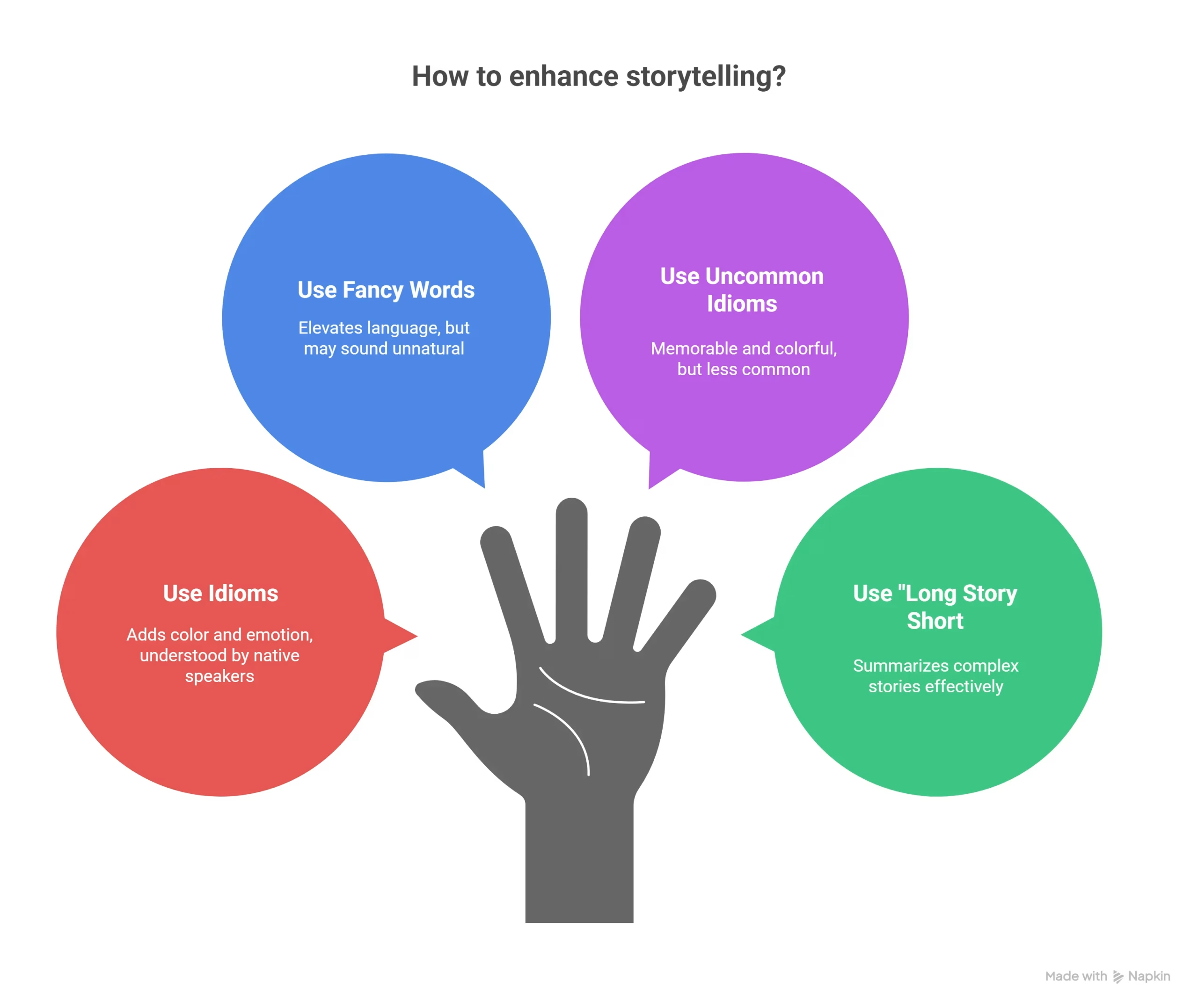
Idioms in a story are figurative expressions that add color, emotion, and cultural authenticity to your narrative. They’re storybook idioms and meanings that native speakers understand immediately because they share cultural context.
For instance, instead of saying “I was extremely angry,” you might say “I was seeing red” or “I hit the roof.” These expressions paint a vivid picture and convey emotion more powerfully than literal language.
While “storytelling” is perfectly fine, you might also use terms like:
1. Narration
2. Narrative
3. Recounting
4. Tale-telling
5. Anecdote-sharing
However, “storytelling” remains the most natural and widely understood term. Don’t overthink this—simplicity often wins.
“Long story short” means you’re about to summarize or skip to the main point of a lengthy story. For example:
“I went through three interviews, two presentations, and a week of waiting. Long story short—I got the job!”
It’s similar to “at the end of the day” but specifically used when you’re deliberately condensing a complex story.
An uncommon idiom is one that’s not frequently used in everyday conversation. For example, “once in a blue moon” is less common than “once in a while,” but it’s more colorful and memorable.
Other uncommon but beautiful idioms include:
1. “A leopard can’t change its spots” (people don’t change their nature)
2. “The ball is in your court” (it’s your turn to make a decision)
3. “Break a leg” (good luck, especially in performance)
You can elevate the word “story” by using:
Chronicle
Account
Tale
Saga
Narrative
Recollection
However, remember: in conversational English, “story” is perfectly appropriate and actually sounds more natural than overly formal alternatives.
English Idioms for Storytelling – Frequently Asked Questions
Final Takeaway: Master These Idioms for Better Storytelling
Here’s what I want you to remember: English idioms for storytelling are like seasoning in cooking. A small, well-placed amount transforms your entire narrative. You don’t need to use dozens of idioms to sound fluent—you just need to use a few effectively.
Your action plan:
- Choose 2–3 idioms from this list that resonate with you.
- Use them in real conversations this week—with friends, colleagues, or even when talking to yourself.
- Keep listening to how native speakers use these expressions in movies, podcasts, and books.
- Practice regularly. The more you use these idioms for narrative writing, the more natural they’ll feel.
Remember, language learning is a journey. Each idiom you master brings you one step closer to sounding confident and natural in English. Want to take your English skills even further? Visit our English Learning Store for comprehensive resources and courses designed specifically for ESL learners.
Now, go ahead—start sprinkling these idioms into your stories and watch how people respond!
At the end of the day, the best way to learn is by doing. So pick your favorite idiom from this list and use it in a conversation today. You’ve got this!
What’s your favorite idiom for storytelling? Let us know in the comments below!